KCSE 2026~ KNEC MUST PRIORITISE HUMAN LIFE AS NOVEMBER RAINS THREATEN EXAMINATION OPERATIONS
As Kenya prepares to administer the Kenya Certificate of Secondary Education (KCSE) examinations from Monday, 2 November, to Friday, 20 November 2026, the country must urgently prepare for possible weather-related disruptions. The examination period coincides with the October–December short-rains season, when some parts of Kenya are expected to experience prolonged wet spells and episodes of heavy rainfall. The Kenya Meteorological Department has warned of enhanced rainfall across much of the country.
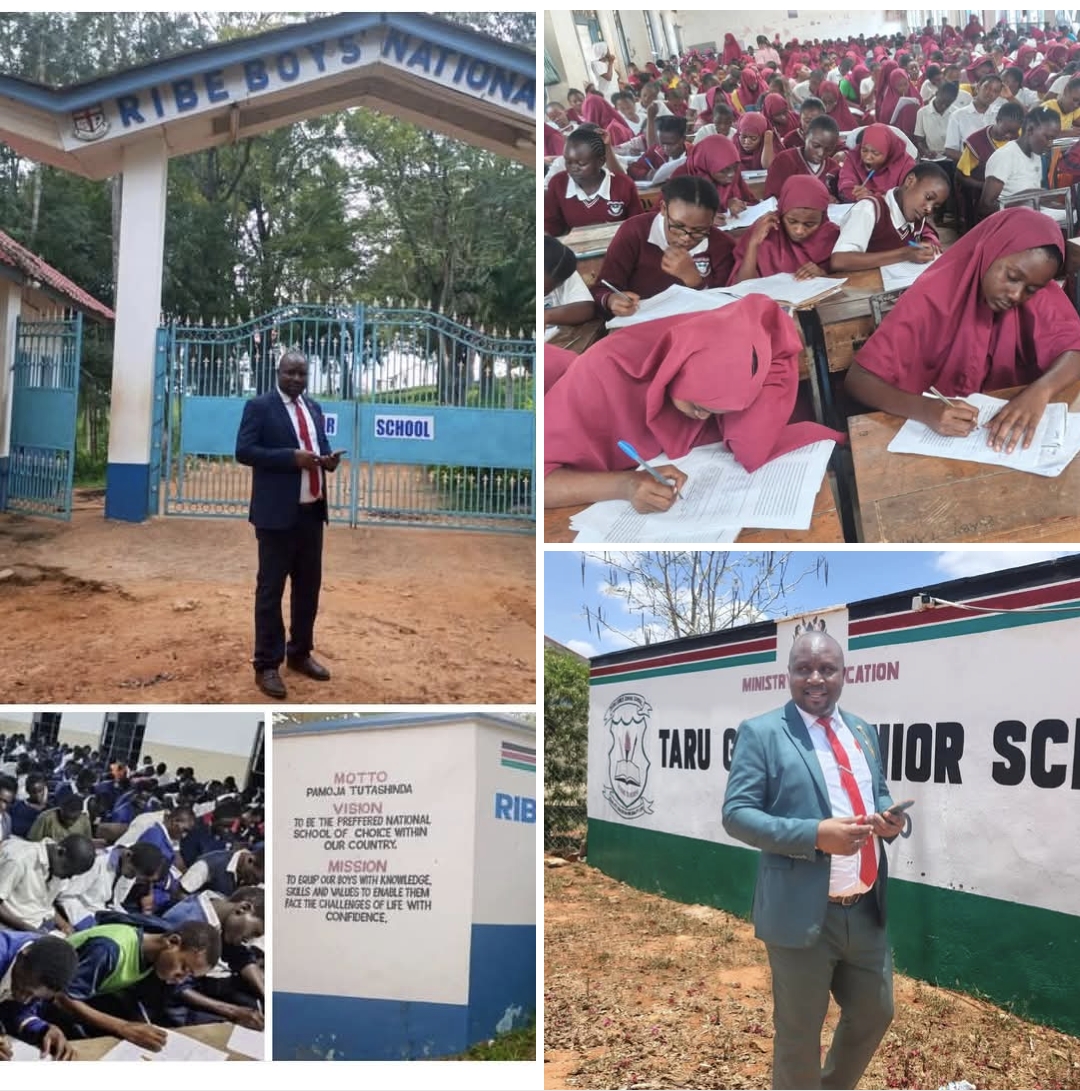
By Mwalimu Malata Benson
The KCSE examination timetable is a national commitment, but the safety of candidates and examination personnel must remain paramount. The government, the Kenya National Examinations Council (KNEC) and the Ministry of Education must ensure that examination logistics do not expose teachers and learners to avoidable danger.
FLOODING, IMPASSABLE ROADS AND DANGEROUS RIVERS
During the examination period, centre managers—principals entrusted with the responsibility of administering examinations—must ensure that examination papers are collected from designated sub-county storage facilities and delivered securely to their respective centres for morning and afternoon sessions.
Some examination centres are located far from these storage facilities. Others are accessible only through roads that become difficult or impossible to use during heavy rainfall. In certain areas, rivers and seasonal streams have no bridges, leaving residents with limited options when water levels rise.
The challenge is particularly serious in areas where even moderate rainfall can disrupt transport and access to schools.
The regions requiring particular attention include:
- - Busia County: Especially Budalangi and other low-lying areas vulnerable to flooding, including communities near rivers and seasonal waterways.
- - Western Kenya: Vulnerable parts of Bungoma, Kakamega, Vihiga and Siaya counties, where river flooding, poor drainage and damaged rural roads can disrupt movement.
- - The Lake Victoria basin: Flood-prone parts of Kisumu, Homa Bay and Migori counties, particularly settlements near rivers, wetlands and low-lying shorelines.
- - The Tana River basin: Floodplain communities in Tana River County, where river overflow can affect roads, bridges and access to institutions.
- - The Coast: Vulnerable low-lying areas of Kilifi, Kwale, Lamu and Mombasa counties, where flooding and poor drainage can disrupt transport.
- - The highlands and steep slopes: Vulnerable parts of Elgeyo-Marakwet, West Pokot, Baringo, Murang’a, Nyeri and other hilly areas, where saturated soils can trigger landslides, mudslides and rockfalls.
- - Urban areas: Flood-prone neighbourhoods in Nairobi and other towns, where heavy rainfall and inadequate drainage can make roads impassable.
These are examples of areas with recognised hazards, not a declaration that every school in the named counties faces immediate danger. KNEC must work with county authorities and local education officers to identify the actual examination centres exposed to flooding, landslides and transport challenges.
“THIS SHOULD NOT HAPPEN THIS YEAR!”
Previously, Kenyans have witnessed principals risking their lives while crossing flooded rivers in the course of examination administration. Such commitment demonstrates the dedication of our teachers, but it also raises serious questions about the safety arrangements surrounding national examinations.
A principal should never be forced to choose between risking drowning and fulfilling an official responsibility. Neither should an invigilator, supervisor, security officer or candidate be expected to expose themselves to danger simply because an examination paper must reach its destination.
“KNEC must prioritise the welfare of candidates, invigilators, supervisors, centre managers and security officers. Previously, we have witnessed principals risking their lives in a flooded river. This should not happen this year,” says Mwalimu Malata Benson.
This is a call for responsible leadership, not an argument against the smooth administration of national examinations. Examination security matters, but human life matters more.
THE METEOROLOGICAL WARNING MUST TRANSLATE INTO ACTION
The Kenya Meteorological Department has provided seasonal forecasts and weather advisories. The government should use these warnings to prepare before emergencies occur rather than wait until roads are submerged, bridges are inaccessible or examination officials are stranded.
KNEC and the Ministry of Education should urgently identify vulnerable examination centres and develop specific contingency plans for each of them.
The plans should include alternative transport arrangements, secure collection points, emergency communication systems and clear procedures for handling situations in which roads become unsafe.
CAN HELICOPTERS AND DRONES HELP?
The government should consider deploying helicopters to transport examination materials to strategically selected areas where road access is cut off and aerial delivery is safe and operationally feasible.
Are helicopters only meant for politicians travelling around the country in search of votes, or can the same national resources be considered for protecting learners and teachers during an important national exercise?
The Ministry of Education should collaborate with the Ministry of Defence and other authorised agencies to assess the feasibility of such deployments.
The government should also explore whether secure drones could transport examination materials between designated collection points and authorised receiving locations in selected sub-counties. This would require careful planning, compliance with aviation regulations, appropriate payload capacity, examination confidentiality and strict chain-of-custody procedures.
Neither helicopters nor drones should be deployed regardless of weather conditions. Heavy rain, strong winds and poor visibility can make aerial transport unsafe. These options must therefore complement, rather than replace, a comprehensive emergency transport plan.
CANDIDATES AND EXAMINATION OFFICIALS NEED SAFE ACCOMMODATION
Where weather forecasts indicate a significant risk, the relevant authorities should consider arranging for candidates, supervisors and invigilators to remain at safe examination centres or approved accommodation facilities situated on secure ground.
Such arrangements should be made in advance and should include adequate food, clean drinking water, sanitation, bedding where necessary, first aid and other basic necessities.
Schools located in areas exposed to flooding or landslides should receive particular attention. No candidate should be stranded on the wrong side of a flooded river, and no teacher should be compelled to travel along a dangerous road to report for duty.
KNEC should also establish clear communication channels with centre managers so that any emerging threat is reported promptly and appropriate decisions are made without compromising examination confidentiality.
RECOGNISE THE SACRIFICE OF TEACHERS
Examination centre managers, supervisors and invigilators perform a demanding national duty. They are entrusted with examination security, accountability and the smooth running of the exercise. Their responsibilities become even more challenging when weather conditions threaten transport and personal safety.
The government should consider special risk-based allowances for examination officials assigned to verified high-risk locations or required to undertake exceptional emergency duties. Appropriate insurance, timely payment of examination-related entitlements and other welfare protections should also be considered.
Teachers who demonstrate exceptional commitment deserve meaningful recognition. This may include formal commendations and consideration under established professional recognition and promotion frameworks, where applicable.
Such teachers should not merely be celebrated on social media as heroes after risking their lives. Their service should be accompanied by practical protection, appropriate appreciation and institutional support.
LET US GIVE NATIONAL ASSESSMENT THE SERIOUSNESS IT DESERVES
KCSE is a national exercise whose success depends on the cooperation of candidates, teachers, parents, education officials, security agencies and the government. Its integrity must be protected, but so must the lives of everyone involved.
The Ministry of Education, KNEC, county governments and relevant emergency agencies must move swiftly to identify vulnerable examination centres, secure alternative transport arrangements and prepare safe accommodation wherever necessary.
The success of KCSE 2026 should not be measured solely by whether examination papers are delivered on time. It should also be measured by whether candidates and examination officials can participate without being exposed to preventable danger.
No examination paper is worth a human life. No timetable should compel a teacher to risk drowning. No candidate should suffer because the country failed to prepare for a foreseeable emergency.
Let us protect our candidates. Let us protect our teachers. Let us safeguard the integrity of KCSE 2026.
Yours in Education, Mentorship and Service,
Mwalimu Malata O.J. Benson
Teacher – Mentor – Publisher – Writer – Political Analyst – Educational Consultant – Motivational Speaker
0728701795 · bensonmalata65@gmail.com
Comments (0)
Loading comments…
Found this useful? Share it with a teacher, parent or KCSE candidate.
More from Educational News