IMF DOES NOT KNOW TUTAM OR WANTAM: KENYA’S ECONOMIC GROWTH DESERVES FACTUAL DEBATE
The International Monetary Fund (IMF) is a global financial institution, not a political campaign organisation. It does not campaign for Tutam or Wantam. Its economic assessments are based on data, statistical models and economic projections, not political slogans.
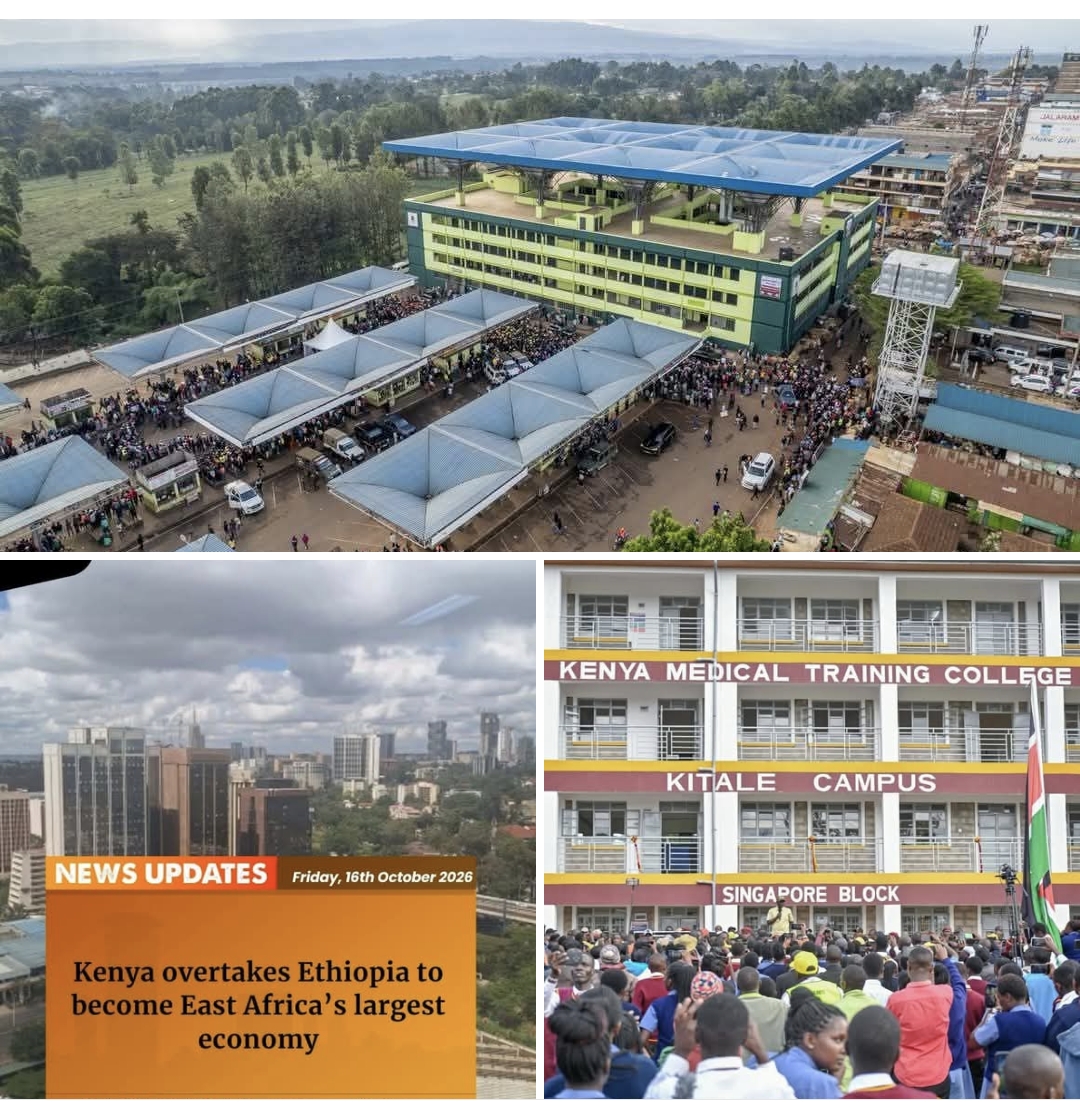
According to the IMF’s October 2026 projections, as reported in the media, Kenya is ranked the seventh-largest economy in Africa, with a nominal Gross Domestic Product (GDP) of approximately US$151 billion.
This is a significant economic milestone that deserves sober discussion. <Link url="https://www.imf.org/external/datamapper/profile/KEN" title="IMF Kenya economic data"/>.
The latest official economic survey also reported that Kenya’s economy grew by 4.6% in 2025, with construction, mining, hospitality, finance and other sectors recording growth.
Furthermore, preliminary figures reported on 16 October 2026 indicated that the economy expanded by 5.1% year-on-year in the second quarter of 2026. <Link url="https://www.knbs.or.ke/reports/2026-economic-survey/" title="Kenya National Bureau of Statistics, 2026 Economic Survey"/>; <Link url="https://www.reuters.com/world/africa/kenyas-economy-grows-51-year-on-year-second-quarter-2026-2026-10-16/" title="Reuters report on Kenya’s Q2 2026 growth"/>.
These figures provide a basis for discussing Kenya’s economic direction and the policies that may be contributing to it.
1. INFRASTRUCTURE: CONNECTING PEOPLE, MARKETS AND OPPORTUNITIES
Infrastructure is a critical pillar of economic development. Roads, bridges, electricity, railways, digital networks and housing can improve the movement of people and goods, reduce transport costs, attract investment and create employment.
When farmers transport their produce to markets more efficiently, traders reach customers more easily, and manufacturers access reliable power, the entire economy benefits.
The government's infrastructure agenda must therefore be assessed not merely by the number of projects announced, but by completed projects, their quality, value for money, maintenance and the number of livelihoods they support.
2. EDUCATION: INVESTING IN KENYA’S MOST VALUABLE RESOURCE
As an education professional, I believe that no economic milestone should distract us from the importance of investing in learners.
Education remains one of the strongest foundations for sustainable economic growth. A country needs skilled teachers, competent doctors, engineers, agricultural experts, entrepreneurs, scientists and technicians to sustain development.
The transition to Competency-Based Education (CBE), investment in Junior and Senior Schools, teacher recruitment, school infrastructure and technical training must be accompanied by adequate funding, learning materials, qualified personnel and effective implementation.
The real test of education policy is whether learners acquire the knowledge, competencies and values needed to secure meaningful opportunities and contribute to national development.
A growing economy must translate into better-equipped classrooms, improved learning outcomes, accessible technical education and a stronger connection between education and employment.
3. SOCIAL WELFARE: ECONOMIC GROWTH MUST REACH THE HOUSEHOLD
GDP figures tell us the value of goods and services produced in an economy. They do not, by themselves, tell us whether every household is financially secure.
That is why social welfare matters.
Access to healthcare, affordable housing, social protection for vulnerable citizens, food security and opportunities for young people should remain central to the national development agenda.
The Social Health Authority, housing initiatives and targeted social protection programmes should be judged by their accessibility, affordability, implementation and measurable benefits to citizens.
A family that can access healthcare without catastrophic financial hardship, a young person who secures meaningful employment and an elderly citizen who receives reliable support are all important indicators of inclusive development.
4. ECONOMIC GROWTH AND GOOD GOVERNANCE
Good governance requires more than economic expansion. It demands accountability, transparency, prudent management of public resources, respect for the rule of law, effective institutions and responsible use of public debt.
Kenya’s reported economic growth provides an opportunity to examine the outcomes of public policies. Infrastructure investment, education reforms, financial-sector activity and other economic measures should be evaluated against credible evidence.
At the same time, citizens are entitled to ask difficult questions about the cost of living, taxation, unemployment, public debt, corruption and the distribution of economic opportunities.
Acknowledging progress does not mean ignoring challenges. Equally, recognising challenges should not prevent Kenyans from appreciating measurable achievements.
Patriotism requires honesty: celebrate what is working, question what is failing, and demand improvements where necessary.
5. GDP RANKING IS IMPORTANT, BUT LIVING STANDARDS MATTER MORE
Kenya’s position among Africa’s largest economies is an important indicator of economic size. However, GDP ranking should not be confused with the rate of economic growth, GDP per capita or the actual purchasing power of ordinary citizens.
A country can have a large economy while many of its citizens continue to face financial difficulties. Economic progress must therefore be measured through several indicators, including real GDP growth, employment, inflation, household incomes, poverty levels, access to essential services and productivity.
The responsibility of national leadership is to ensure that economic expansion creates wider opportunities and improves the quality of life.
CONCLUSION: LET THE DATA SPEAK
The IMF does not campaign for Tutam or Wantam. Its economic assessments provide evidence that citizens, policymakers and political leaders can examine and debate.
Kenya’s reported seventh-place position in Africa and the recent growth figures offer a reason to discuss the country's economic trajectory seriously. They do not, on their own, establish that every government policy has succeeded or that every Kenyan is benefiting equally.
The task ahead is to sustain productive investment, strengthen public institutions, improve education, expand employment, protect vulnerable households and ensure that public resources deliver measurable value.
A growing economy should build better roads, stronger schools, accessible healthcare, dignified housing and more prosperous households. That is when economic statistics begin to tell a meaningful story about national development.
Prepared by Mwalimu Malata Benson — Teacher, Writer, Publisher, Educational Consultant, Scholar, Mentor and Motivational Speaker.
Yours in Education, Mentorship and Service,
Mwalimu Malata O.J. Benson
Teacher – Mentor – Publisher – Writer – Political Analyst – Educational Consultant – Motivational Speaker
0728701795 · bensonmalata65@gmail.com
Comments (0)
Loading comments…
Found this useful? Share it with a teacher, parent or KCSE candidate.
More from Leadership